

Internal systems
Enterprise Systems
We build the systems that support day-to-day operations: internal tools, operational platforms, and integrations across your existing technology estate. The result is secure, reliable, accountable software that reduces operational friction and gives teams information they can trust.
Engineered to production standard · fully owned
Every department, one system.
Finance, HR, operations and reporting on one governed, auditable core — no more disconnected tools.
- TargetUsers
- 10k+
- TargetUptime
- 99.9%
- TargetManual work
- −40%
- TargetSystem of record
- 1
Figures are targets we engineer to on a typical engagement — not averaged client results.
One source of truth
- Map
- Integrate
- Migrate
- Secure
- Operate
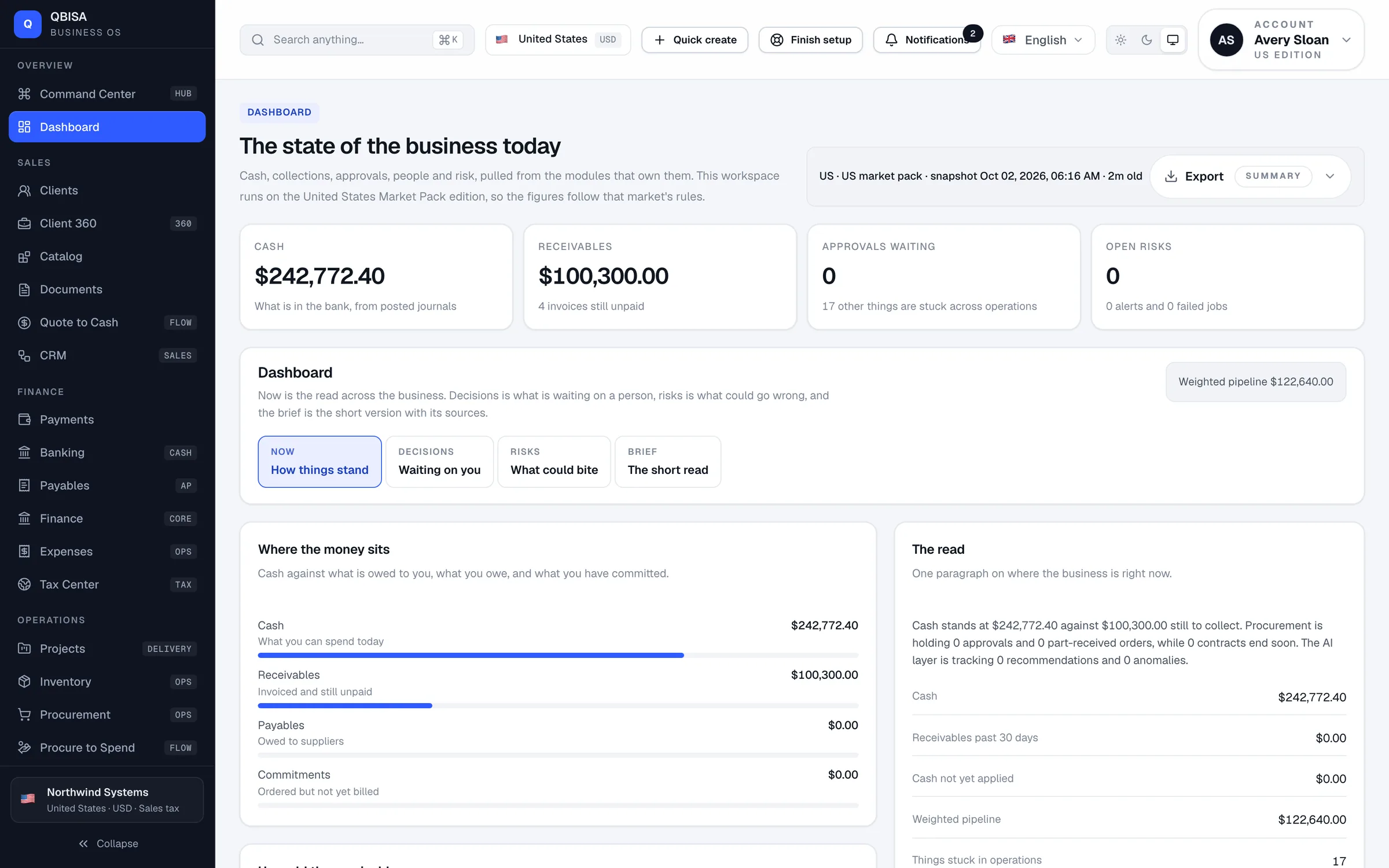
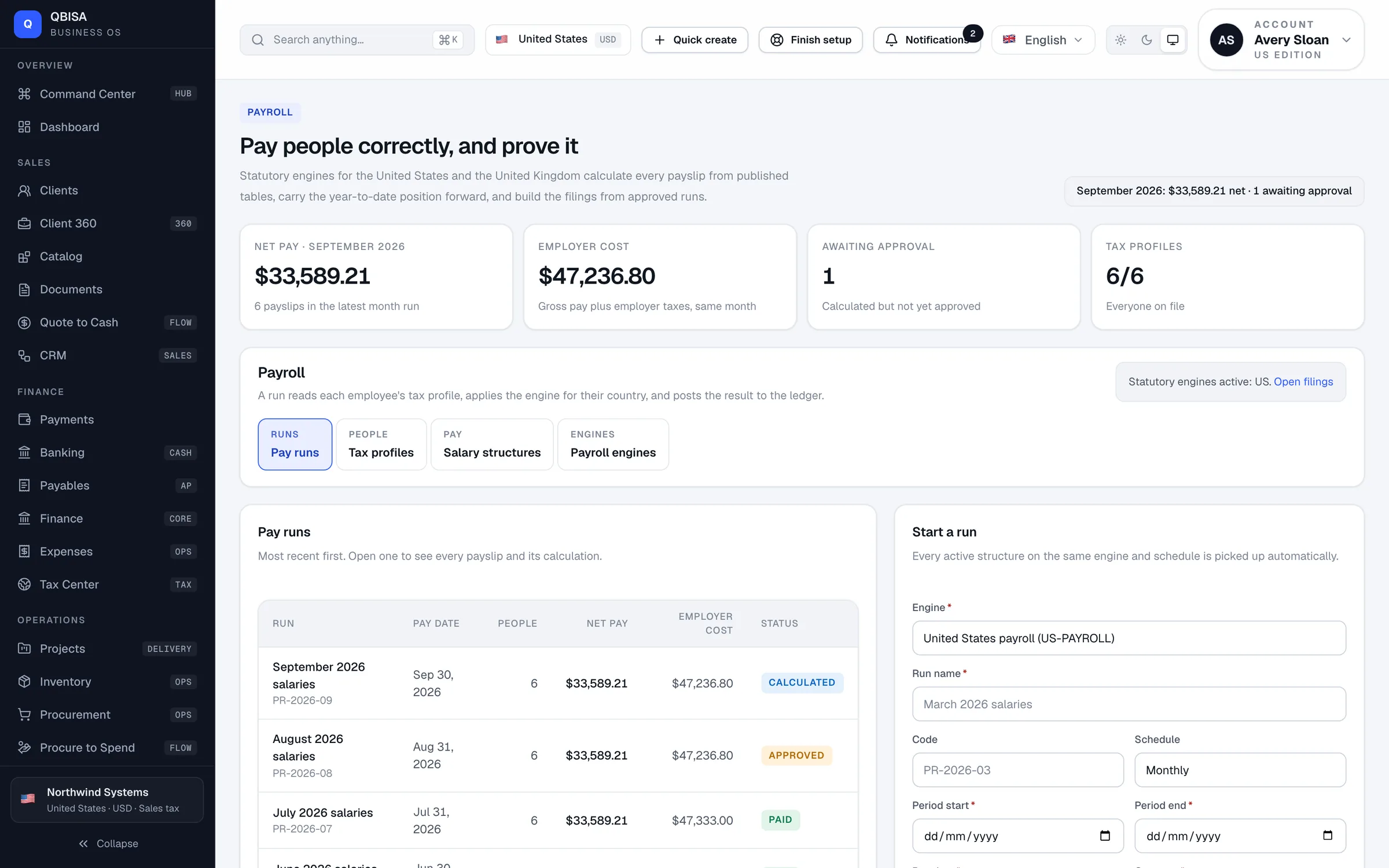
Our own product
QBISA
A next-generation ERP for companies of up to 10,000 employees
Read the case studyWho this is for
Mid-size to large teams drowning in ops
Replace manual, spreadsheet-driven work with an internal platform built around how your team actually operates.
Businesses with a disconnected tool stack
Make your CRM, ERP, and billing talk to each other so nothing falls through the gaps between systems.
Teams that need compliance-grade access
SSO, role-based access, and full audit trails — internal tools your security and compliance teams sign off on.
Where teams put it to work

Ops platforms
Replace spreadsheets and manual steps with a system built for your operation.
Integration
Make your CRM, ERP, and billing actually talk to each other.
Tool consolidation
Collapse a sprawl of tools into one accountable platform.

Why this, why now
Every manual handoff between tools is a future incident waiting for a bad day.
The businesses that scale cleanly are the ones that automated the glue between systems years before they were forced to — not the ones patching it together during a crisis.
Typical timelines
Ballpark, for a focused first version — not a guarantee, a starting point for scoping.
- Single integration (CRM, ERP, billing)3–5 weeks
- Internal ops platform8–12 weeks
- Multi-system integration suite12–16 weeks
- Full internal platform (SSO, audit, roles)16+ weeks
How we build Enterprise Systems

Map
Map the workflows, systems, and the hand-offs between them.
Connect
Integrate the tools you already run via robust, monitored APIs.
Build
Internal tools and operations platforms tailored to how you work.
Secure
Access control, auditability, and reliability built in.
What we deliver
- Internal tools & admin platforms
- Systems integration (CRM, ERP, billing…)
- Workflow & operations platforms
- SSO, roles & audit logging
- Data sync & migration
- Reliability targets & ongoing support
Typical stack
- TypeScript
- Node.js
- PostgreSQL
- REST / GraphQL
- SSO
- Queues

Related work
Questions, answered
If it has an API or a database, almost certainly. We specialize in connecting messy, real-world stacks.
Either. We deploy to your cloud, our managed infrastructure, or on-prem where required.
SSO, role-based access, and full audit trails as standard.

Tell us about your Enterprise Systems project
Let's turn it into something that earns its place in production.

A specialist reads every message personally — usually within one business day.

Outgrown your stack of tools?
Book a strategy call to discuss your objectives, constraints, architecture, and the most sensible route to delivery.